

Missing teeth can cause a whole lot more than just an unattractive smile. They can lead to difficulty in chewing, a change in your facial structure, and can even lower a person’s self-confidence.
Dental implants can provide an excellent remedy for missing teeth. But what happens if you have also got the problem of gum recession? Would the condition of receding gums disqualify you from receiving dental implants?
Actually no, it is still possible to have dental implants with receding gums as long as the gums and jawbones are strong enough to hold these artificial root-like structures. That said, prior to the placement of the implants the existing gum problems need an effective solution.
By undergoing a thorough dental examination, one could avoid any unexpected complications along the way and come up with a smile that will last.
What Causes Gum Recession?
When your gums pull away gradually from around your teeth, they leave more of the tooth or even the root exposed. Other than making your teeth look longer, it also makes your teeth prone to damage.
Factors that can lead to gum recession are:
- Gum disease: Periodontitis damages the tissues and bone supporting your teeth, gradually causing the gums to recede.
- Aggressive brushing: Brushing too hard or using a hard-bristled toothbrush can wear away gum tissue over time.
- Poor oral hygiene: Plaque and tartar buildup can irritate the gums and contribute to periodontal problems.
- Genetics: Some people naturally have thinner gum tissue, making them more susceptible to recession.
- Smoking: Tobacco use affects gum health and can increase the risk of periodontal disease.
It is crucial to identify why it is happening because it is different from the usual cases before choosing the solution like dental implants at the appropriate dental clinic in Patna.
Can You Get Dental Implants If You Have Receding Gums?
Of course, it is possible to receive dental implants with receding gums, as long as your gums and bone supporting them are in a good state for dental implants.
Mild gum recession where the gingival recession is not an aggressive one, or even the absence of gum disease, is probably not a factor that will stop you from getting your dental implant.
On the contrary, severe gum recession that is caused by periodontitis may require your treatment before any kind of dental implant. Though after treatment, it is possible to get an implant for severe gum disease.
Your dentist will evaluate your situation and might suggest periodontal therapy, gum (transplant) surgery, bone grafting for implant surgery preparation. The dental implant treatment in Patna could be more or less invasive depending upon whether your jawbone is strong enough or not.
Treatments to Cure Receding Gums Before Dental Implants
Receding gums cannot always be completely reversed, however several treatments can restore the health of the gums and prepare your mouth for implants.
Scaling and Root Planing
Periodontal disease leading to receding gums may demand a more profound cleaning. The method consists of plaque and tartar removal below the gumline and the tooth roots polishing to minimize bacterial colonies.
Gum Grafting
If someone has lost too much of their gum tissue, they might need to have a piece of gum tissue from another area of the mouth to cover exposed teeth and restore gum thickness. The procedure helps prevent future complications, strengthens the existing tissue and provides a suitable condition for teeth or other dental work.
Bone Grafting
Advanced periodontal disease not only threatens the health of your gums but also may result in a loss of the underlying jawbone. To place a dental implant successfully, enough bone is required. That’s why bone grafting could be recommended if the jawbone has been depleted to a point that an implant can’t be supported anymore.
Such a procedure enables one to get a more robust base of support for placing an implant thereby increasing its potential to remain in good condition for the years to come.
Periodontal Treatment
If a patient has active periodontitis then controlling the infection is very important before implant surgery. Treatments can involve deep cleaning in certain cases, prescription use and regular periodontal checks. By doing so a more suitable and safer environment for implant surgery is produced and the risk of complications of dental implant failure can be minimized.
Essentially, the treatment is determined based on the degree to which gum and bone tissues have been resorbed. A qualified dentist will conduct an oral health examination of you and offer the appropriate course of treatment.
Consequences of Untreated Gum Recession on Dental Implants
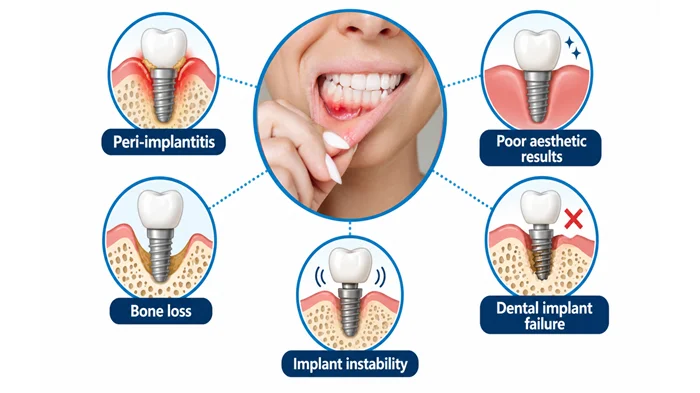
Choosing to ignore gum recession and going ahead with the placing of the implants right away will make your dental treatment more risky.
A few possible problems are:
- Peri-implantitis: Bacterial infection around an implant can cause inflammation and progressive bone loss.
- Poor aesthetic results: Receding gums may expose parts of the implant restoration, affecting the appearance of your smile.
- Bone loss: Existing periodontal damage may compromise the bone needed to support the implant.
- Implant instability: Severe bone loss or infection can affect implant integration and long-term stability.
- Dental implant failure: If the surrounding tissues cannot adequately support the implant, it may fail to integrate or lose stability over time.
Therefore, before implant surgery, the existing problems in gum tissue should be tackled through various methods to treat gum disease. Adhering to the recovery tips of dental implant treatment, such as mouth cleaning, dieting, and coming in for the appointments after surgery, is also vital to your recovery.
How to Prevent Gum Recession?
There are still some cases where it is difficult to stop gum recession entirely, but taking care of the mouth and recognizing early symptoms of the problem can at least decrease the chances.
- Brush twice daily using a soft-bristled toothbrush and gentle circular movements.
- Floss daily to remove plaque and food particles between your teeth.
- Schedule regular dental check-ups and professional cleanings.
- Avoid smoking and tobacco products.
- Seek treatment for bleeding, swollen, or persistently sensitive gums.
- Avoid brushing too aggressively or using excessive pressure.
- Follow your dentist’s recommendations if you have a history of periodontal disease.
It is highly advised to keep up with all mentioned habits if you have installed dental implants and a healthy neighborhood can give them long-term protection.
Get Expert Dental Implant Care at Dr. Sachin’s Dental
Have you been thinking about getting dental implants but are worried you have a gum recession? Making an educated diagnosis prior to therapy really can make a difference to your results.
Dr. Sachin’s Dental offers professional dental assessments according to patients’ individual needs. If your periodontal tissue is slightly receding, you have lost one or several teeth or you’re just wondering about whether it’s wise to get implants when periodontal disease is quite advanced.
You may also want to factor in how you find out dental implant cost in Patna when you weigh up your options for dental care. A great deal of it will depend on the number of implants that you have, what kind of system they are and if supplementary procedures like bone or gum grafting will be needed.
FAQs
Here are some common questions about receding gums and dental implants to help you make an informed treatment decision.
Can I get implants if my gums are receding?
Yes, dental implants are possible with receding gums if there is sufficient healthy jawbone and no active gum infection.
How painful is receding gum surgery?
Gum grafting is usually performed under local anaesthesia, so you may feel some pressure but minimal pain during the procedure.
Do gums recede with dental implants?
Yes, gums around dental implants can recede due to poor oral hygiene, infection, tissue changes, or excessive brushing.
What vitamin rebuilds gums fast?
Vitamin C supports gum tissue repair and healing, but no vitamin can independently rebuild lost gum tissue.
Will teeth fall out if gums recede?
Severe, untreated gum recession caused by periodontal disease can lead to bone loss, loose teeth, and eventually tooth loss.
Conclusion
Loose fitting gums doesn’t mean that you can’t have your dental implants with receding gums. Most people still manage to replace their missing teeth, if they are timely diagnosed and well treated. Besides, treating your current gingivitis and guaranteeing enough supportive bone will be of great significance when it comes to putting in the implants.
At Dr. Sachin’s Dental you will be given a full examination of the health of your mouth and you will also be advised on the kind of treatment that best suits you. No matter what your condition entails gum treatment, bone grafts or implants the correct direction can lead to having healthier teeth and gums and a result which will last.
Make an appointment with Dr. Sachin’s Dental today and get going on the journey to a better-appearing smile.


