
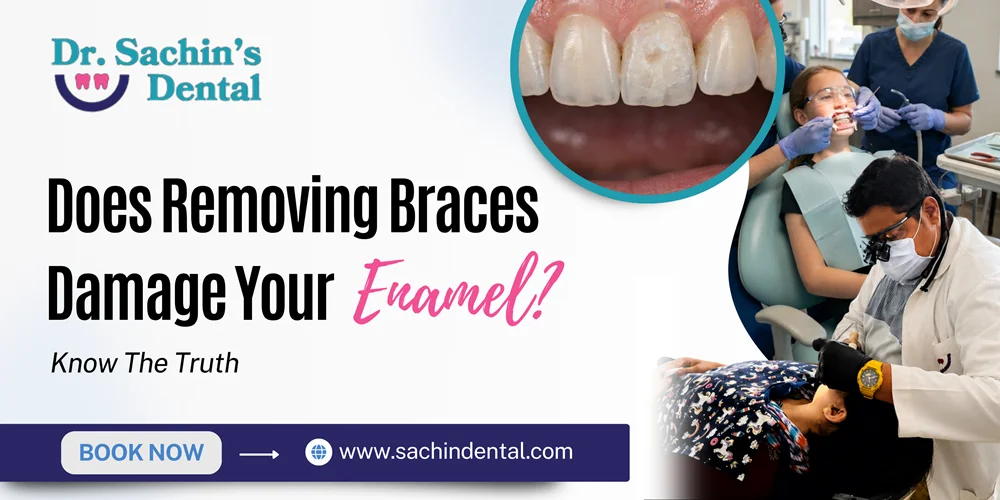

When people remove their braces, they may notice white spots, rough patches, discoloration, or increased tooth sensitivity. These changes can be concerning and may make you wonder, “Can removing braces damage enamel?”
The positive news is, as long as braces are correctly removed, they do not cause any harm to the healthy tooth enamel. The removal process, also called “orthodontic debonding” is relatively safe. However, during orthodontic treatment, there is possibility for the enamel changes, caused by plaque accumulation, poor dental health, acid and sugar laden food or after demineralisation. There may be some roughness left from bonding.
Knowing the difference between enamel damage from braces removal and changes during orthodontic treatment will ensure that you know how to identify a problem and respond accordingly.
How Braces Are Actually Removed?
The removal of braces is called orthodontic debonding. This process involves gently releasing the brackets from the teeth using a variety of specially designed instruments as part of dental services.
Note that we do not “drill off” or “grind off” brackets from teeth. Often, some bonding adhesive remains on the enamel surfaces after removal of brackets and this must be removed using dental handpieces and polishing burs.
Also, removal of brackets and residual adhesive are two completely different procedures.
One of which is of low risk and can be done easily with the correct instruments, and the other of which requires great precision and care, and can cause significant damage to teeth surfaces if not done properly.
So, Does Removing Braces Damage Enamel? The Honest Answer
Honestly, there is no harm to the enamel of a normal tooth if debonding is carried out properly. Modern orthodontic techniques remove brackets and their related material in the best way to preserve the tooth in good structure.
Aggressive removal of braces can cause enamel damage and even surface scratches. This type of damage can be caused by the improper use of polishing burs or excessive pressure when removing adhesive.
It is important to differentiate between the tooth’s surface being slightly roughened and enamel loss. Even slight surface roughening does not necessarily mean serious damage to the tooth structure. Various clinical studies have reported on enamel alterations caused by adhesive removal.
However, the extent and nature of enamel changes are dependent on several factors including the material used for bonding, the cleaning instruments used and the debonding technique employed. Therefore, a proper debonding technique is indeed to remove the brackets and adhesive without causing any harm to the teeth.
What People Often Mistake for Enamel Damage?
Several changes that occur after the removal of the braces can be linked to problems that occurred during the treatment with braces.
White Spot Lesions (Demineralization)
These new white spots can also appear as a result of plaque around the braces. Eventually, it will let bacteria producing acids to remove minerals from the enamel surface creating white patches.
Demineralization of the enamel (to form White Spot Lesions) is caused by inadequate oral hygiene during the time when the braces are fitted. These lesions become more apparent after the braces have been removed.
Enamel Staining and Discoloration
Uneven tooth color after braces removal can often be caused by existing color differences of the teeth that were hidden by the brackets. Also, plaque, food residues, poor oral hygiene and other external influences can cause unequal tooth color after the removal of the braces. Although, these changes do not always indicate enamel damage from braces removal and should be evaluated on the basis of underlying cause.
Rough or Uneven Tooth Texture
This is caused by residual bonding adhesive left on the teeth after removal of the braces. Your dentist can assess the surface and provide further polishing if required. However, roughness can also occur due to plaque buildup, tartar, or minor enamel changes that developed during the orthodontic treatment.
Increased Tooth Sensitivity
Some people may even notice an increased sensitivity to cold food and drinks after having their braces removed, and this can be temporary but it can also be caused by enamel demineralization or by other dental problems. If sensitivity continues or becomes more severe, it is advised to maintain the oral health and dental hygiene with braces.
It is essential to determine the cause of uneven tooth color in order to treat it properly. The required dental care ranges from a simple polishing at the dentist’s office to a fluoride treatment, and, in extreme cases, to aesthetic dental treatments.
Factors That Actually Increase Enamel Risk
During the time of orthodontic treatment with braces, as well as during the removal of the braces, there are several factors that can increase the risk of enamel problems.
- Bad oral hygiene: The risk of white spot lesions and enamel demineralization by plaque build-up on brackets.
- Aggressive polishing tools: Using the wrong burs or excessive use of them for cleaning the adhesive residues can cause damage to the enamel surface.
- Hastily conducted treatments: There is a risk of unnecessarily removing too much enamel during removal of the braces.
- Weak enamel: The enamel on your teeth may already be weak due to conditions like enamel hypoplasia making them more sensitive and prone to damage.
- Acidic and sugary foods: Frequent consumption of sweets, soft drinks and acidic beverages leads to tooth decay and to mineral loss from the enamel.
Therefore, maintaining good oral hygiene and choosing an experienced dentist for dental braces treatment in Patna can help minimize risks of enamel problems.
How to Protect Enamels Before, During, and After Braces?
The enamel should be protected throughout the entire orthodontic treatment.
- Before Braces Removal: Go for your enamel checked for early signs of decay such as white spots; consider a fluoride treatment if you have sensitivity or early stages of demineralization.
- During Braces Treatment: Brush around brackets with an orthodontic toothbrush, floss around wires, go to dental cleanings, and try to avoid eating sugary and acidic foods while you are in treatment.
- After the brackets have been removed: Depending on your teeth, a professional polishing and possibly special post-braces treatments with fluoride to protect the enamel may be needed. You should wear your retainer as instructed by your dentist and clean it correctly to preserve the achieved results with the braces and your oral health in general.
Proper oral hygiene and regular check-ups can protect your teeth after braces removal and help prevent enamel damage from braces removal, keeping your smile healthy. For personalized post-braces care and professional guidance, choosing an experienced dentist, such as Dr. Sachin, can help you access any enamel damage early.
Why Choose Dr. Sachin’s Dental?
Dr. Sachin’s Dental focuses on personalized dental care based on each patient’s individual oral health needs. A the best dental clinic in Patna, it often combines modern dental approaches with a patient-focused environment designed to make treatment comfortable.
With 10+ years of experience and 54,000+ satisfied patients, Dr. Sachin’s Dental provides comprehensive dental care for different oral health needs. The clinic also offers dental braces, preventive care, dental cleaning, cosmetic treatments, and other dental services.
For patients concerned about sensitivity, white spots, roughness, or other enamel changes after braces removal, Dr. Sachin can assess the condition of the teeth and help determine the appropriate care.
FAQ’s
Here are some common answers to your questions regarding enamel damage from braces removal.
Does removing braces always cause white spots?
No, white spots are usually linked to enamel demineralization during orthodontic treatment rather than brace removal itself.
Is enamel damage from braces removal permanent?
Proper brace removal does not usually damage healthy enamel, but aggressive adhesive removal can cause surface changes.
Can enamel be repaired after braces come off?
Early enamel damage may improve with fluoride and remineralization, while more severe damage may require restorative treatment.
How long does sensitivity last after debonding?
Mild sensitivity may be temporary, but persistent or worsening sensitivity should be evaluated by a dentist.
How much braces treatment costs in Patna?
The braces treatment cost in Patna generally ranges from ₹25,000 to ₹90,000, depending on the type of braces, case complexity, treatment duration, and clinic.
Conclusion
Typically removing braces does not harm healthy enamel. Most white spots, discoloration and sensitivity are caused by changes to the enamel during the orthodontic treatment, not by the removal of the braces.
If you have just completed your treatment with braces, then a post-braces enamel check at Dr. Sachin’s Dental clinic in Patna would reveal any problems with the enamel. We will also ,then, advise on whether a simple polish is required or if a course of fluoride treatments or further treatment would be more appropriate.
Book an appointment today at Dr. Sachin’s Dental in Patna and get on your way to good oral health and a wonderful smile.


