

You brushed your teeth, rinsed with mouthwash, but still have bad breath? Though bad breath is a very common problem, it can be very annoying and even embarrassing, especially when you brush your teeth regularly.
Unfortunately, just brushing your teeth is not enough to solve oral odor problems. Often, the causes of bad breath are hidden on your tongue, between your gums, in food particles between your teeth, in a dry mouth, in a cavity or even due to a disease.
In this blog, we will help you to understand the reason behind your smelly breath, can help you address the issue and prevent it from coming back.
What Causes Bad Breath Even After Brushing?
Bad breath, often referred to as halitosis, is caused by bacteria in the mouth that release an unpleasant odor. Many of the bacteria and food particles that cause odour can be removed from the mouth by brushing. But some may get lodged in places that brush cannot reach.
Here are some common reasons for ongoing bad breath even after brushing:
1. Bacteria on the Tongue
The surface of the tongue is rough with many grooves. Here, bacteria, dead cells and food particles may stick. Brushing teeth is not enough to get rid of odour producing bacteria. Essentially, the tongue must also be cleaned.
What to do: Gently scrape your tongue once a day with a tongue cleaner or the back of your toothbrush. Be careful not to scrape too hard and irritate your tongue.
2. Gum Disease
Persistent bad breath can be caused by gum disease, a serious condition which is caused by the plaque on your teeth building up on the gumline. This can cause inflammation and start to bleed easily. The gums can become swollen and painful to touch and have a foul odor.
There are some gum diseases which can be treated by a dentist only. But if you are suffering from gums which are bleeding/sore or even suffering from persistent bad breath even after brushing, you must get a dental check up in Patna done by a good dentist.
3. Food Trapped Between Your Teeth
Food trapped between your teeth is not removed by brushing your teeth. The spaces between teeth are cleaned by dental floss or interdental brushes. People with crowded teeth, dental work like bridges, or worn teeth may have specific methods to clean between their teeth recommended by their dentist.
For the spaces between teeth, use dental floss or an interdental brush on a daily basis to clean them. If you have crowded teeth or are wearing dental braces, dental bridges or other dental work then your dentist can recommend you the best way of cleaning between your teeth.
4. Dry Mouth
Saliva is nature’s mouth wash. When it is decreased, bacteria in the mouth multiply more quickly causing bad breath. Dehydration, certain medicines, mouth breathing and other conditions can cause a dry mouth.
Simple ways to help:
- Drink enough water throughout the day.
- Limit excessive caffeine and alcohol.
- Chew sugar-free gum to stimulate saliva.
- Avoid smoking and tobacco products.
Talk to your dental professional about the problem of dry mouth if it persists.
5. Cavities or Tooth Infection
As food and bacteria get stuck in the hole of a decaying tooth it can cause a person to have persistent halitosis. One of the causes of tooth decay is the accumulation of bad bacteria in the mouth, which can also cause bad taste, tooth sensitivity, gum inflammation and pain in the tooth.
You may require a root canal or even an extraction to get rid of the infection. The more you brush your tooth with tooth paste the more you shall aggravate the problem.
6. Poor Oral Hygiene
Good oral hygiene includes brushing the teeth in a regular manner but also cleaning between the teeth and the tongue as well.
A complete routine generally includes:
- Brushing twice daily with fluoride toothpaste.
- Cleaning the tongue and between teeth every day.
- Drinking adequate water.
- Having regular dental checkups.
Some of the missed mouth areas are the very particular reason for persistent mouth odor.
7. Dentures, Braces, or Dental Appliances
Dental appliances pick up food particles and bacteria which can harbor in the appliance until cleaned after removal.
Follow your dentist’s advice for cleaning dental appliances like dentures, retainers and other oral appliances. Remove dental appliances at night and clean them as instructed by your dentist, rather than leaving them in your mouth overnight.
8. Tobacco and Smoking
Tobacco use and smoking can lead to the occurrence of unpleasant mouth odors. Their regular consumption can also cause dry mouth and the increase of plaque and bacteria in the mouth. Another problem while consuming them is they increase the risk of developing gum disease and other oral health problems.
That’s why, quitting tobacco use is one of the healthiest things you can do for your teeth and overall body.
How to Get Rid of Bad Breath?
All cases of halitosis need to be treated differently. Even simple measures can be effective for people suffering from persistent odor of their breath even after brushing their teeth.
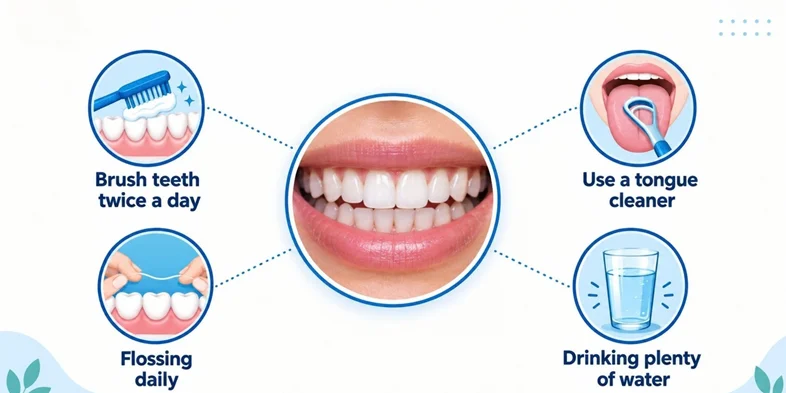
- Brush your teeth twice a day for about 2 min using gentle circular motions, paying special attention to the gumline. Do not brush too hard as this can cause damage to your gums.
- You can also use a tongue cleaner to gently remove bacteria and food debris from the surface of your tongue.
- Daily flossing is another important habit, which helps to remove food particles and plaque between teeth that brushing has missed.
- Drink plenty of water throughout the day to keep your mouth hydrated, helping to wash away bacteria that can cause odors.
A dental examination can reveal the cause of persistent halitosis. At Dr. Sachin’s Dental, we provide complete dental check-up and recommend the appropriate treatment for cavities, gum disease, tooth decay, plaque and other oral infections.
Why Choose Dr. Sachin’s Dental?
With 10+ years of experience in treating a wide range of dental concerns, Dr. Sachin Kumar has helped over 10,000 patients. His personalised approach helps identify and treat the underlying causes of persistent bad breath.
Visit the best dental clinic in Patna if you experience:
- Bad breath continues for several weeks.
- Brushing and flossing do not improve the problem.
- Gums are swollen or bleed when brushing.
- Severe or persistent tooth pain.
- Loosen or sensitive teeth.
- You have a persistent dry mouth.
Mouthwash may provide temporary relief, but identifying and treating the underlying cause is more effective. At Dr. Sachin’s Dental, a dental examination can help identify the cause of persistent bad breath and guide you toward appropriate treatment.
Final Thoughts
Even if you brush your teeth your breath can smell because of many reasons. Bad breath is caused by the bacteria on your tongue and gums, by gum diseases, tooth decay, food trapped between your teeth, and by dental infections.
That’s why, identifying the root cause of bad breath instead of disguising odors with mouth washes and mints over and over again is necessary. By following a complete oral hygiene routine and dental check-ups, you can help to keep your mouth healthy and fresh.
However, if you continue to suffer from bad breath even after brushing, it is worth visiting Dr. Sachin’s Dental for an examination to identify the cause and treatment options available.


