
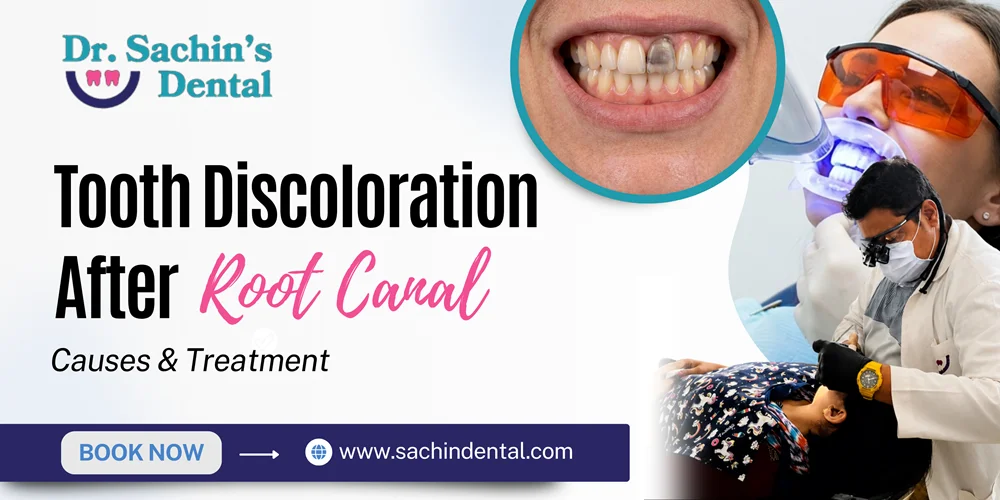

Root canal treatments are performed to save a tooth that has been severely damaged or infected. Sometimes tooth discoloration after a root canal, can cause the treated tooth to appear yellow, brown, or grey than the adjacent teeth. This discoloration can be of greater concern if it is to occur with a front tooth, and even become a cosmetic issue.
Although discoloration can often occur for several reasons. Meanwhile, a darker tooth does not always mean that the root canal has failed. The causes, conditions, and structure of the tooth need to be assessed before treatment.
In this blog, we’ll explain why teeth discolor after root canal treatment, how it can be prevented, and available treatment options.
Why Does a Tooth Discolor After Root Canal Treatment?
Tooth discoloration after a root canal can occur for several reasons, including changes inside the tooth or factors related to the treatment itself. Knowing what causes the real change can help determine whether the tooth needs treatment or simply monitoring.
Residual Blood or Tissue Debris
During endodontic treatment, great care is taken to remove all infected and/or damaged pulp tissue from within the tooth. In some instances, however, there is the possibility that small amounts of blood or debris, or their breakdown products, may remain within the root canal system and cause internal staining to develop over time.
Changes in Dentinal Tubules
Dentin consists of microscopically fine tubes called dentinal tubules. The changes in the dentinal tubules after the removal of the dental pulp can be responsible for a darker or yellowish discoloration of the tooth over time. A tooth undergoes these internal changes, its natural shade may gradually become more natural.
Root Canal Filling Materials
Internal tooth staining can also occur due to the properties of root canal filling materials. This is dependent upon correct cleaning of the root canal followed by the appropriate placement of the root canal filling material. If certain materials remain close to the certain part of the tooth, they may gradually affect its color and cause noticeable discoloration.
Previous Pulp Damage
Even when the pulp had already died before the root canal treatment, blood degradation products may have caused tooth discoloration. As the compounds break down, they can seep into the dentin and gradually give the tooth a yellow, brown, or even grey appearance. This type of internal staining may become more noticeable after the pulp damage.
Natural Ageing
As teeth get older they naturally change color and become darker. The change in shade of a root filled tooth is often more noticeable than that of the surrounding teeth. Teeth can also become less translucent as dentin thickens with age, affecting their overall shade. As a result, a root-filled tooth may appear different, making the contrast more visible.
The exact cause of discoloration can vary from person to person. Identifying the cause helps your dentist to determine whether monitoring or teeth whitening in Patna is needed.
Is Tooth Discoloration After Root Canal Normal?
Tooth discoloration after a root canal is often noticed in front teeth, which may appear slightly darker after treatment. However, this does not necessarily mean that the root canal treatment has failed.
However, if your tooth becomes discolored and you also experience pain, swelling, tenderness, repeated gum abscesses, unpleasant tastes or soreness when biting, then it is wise to have your teeth checked by a dentist as there could be an underlying infection.
An examination (and if necessary, an X-ray) can be carried out to determine whether all is well with the tooth before cosmetic treatment is started.
How to Prevent Discoloration After Root Canal?
While there is no guarantee that tooth discoloration can be completely prevented, there are a number of steps recommended by the best dental clinic in Patna:
- Select an experienced dentist for cleaning and disinfection in root canal treatment.
- Ensure appropriate permanent restoration after the procedure.
- Follow the dentist’s recommendations concerning a crown for back teeth.
- Maintain good oral hygiene.
- Reduce consumption of tobacco, strongly staining foods and drinks (such as tea and coffee).
Although discoloration cannot always be avoided, proper care during and after a root canal treatment can help reduce the chances of noticeable color changes.
Treatment Options for a Discolored Tooth After Root Canal
The treatment of tooth discoloration depends on several factors, i.e. the cause and degree of discoloration, the dental status of the tooth, its location and the patient’s aesthetic demands.
1. Internal Tooth Whitening / Walking Bleach Technique
The Internal tooth whitening / Walking bleach technique is used for selected root canal-treated teeth with internal discoloration.
External whitening products are applied to the outside of the tooth, whereas in internal whitening, the appropriate whitening agent is placed inside the tooth and sealed. The patient returns for follow-up appointments to assess the change in shade of tooth color.
This is a good solution for a single front tooth that is normally decayed and needs no crown.
2. External Teeth Whitening
Stains on the surface of the teeth can be treated with external teeth whitening. It is suitable for very mild discoloration or for several teeth that have become dark.
It is possible that external whitening will not remove deep staining within the tooth. However, your dentist will be able to recommend whether external whitening, internal whitening or a combination of both is best for you.
3. Dental Crowns or Caps
A dental crown is a solution for restoring the look and the function of a tooth. A root canal treated tooth may need a crown as it gets weakened and can crack or even break due to dental work already done on it, or it may get stained badly and look unsightly.
Teeth in the back of the mouth often need more protection as they are subjected to most of the chewing forces. Choosing between whitening, veneers and dental crown treatment in Patna depends on the extent of required structure change.
4. Composite Bonding
Composite bonding is a conservative cosmetic solution to mild discolouration of teeth. Using tooth-colored composite materials, we can fill in, shape and change the color and/or shape of your teeth to give you the smile you want. This procedure can be used for small cosmetic changes but is not suitable for severely discolored teeth.
The final choice always depends on the tooth involved, severity of discoloration, structural condition, and patient’s aesthetic goals.
What to Expect at Dr. Sachin’s Dental?
A discolored tooth is first assessed at our dental facility, Dr. Sachin’s Dental. X-rays could be recommended to evaluate the previous root canal treatment and rule out any infection or underlying dental concerns.
Now that the tooth has been evaluated for possible cosmetic treatment and the dentist or endodontist has cleared the tooth for such treatment, the dentist can determine the desired shade and discuss the patient’s aesthetic goals.
The dentist can then explain the recommended treatment plan, the number of appointments required, the expected treatment duration, and the aftercare needed to maintain the results.
Treatment may include internal bleaching, external whitening, composite bonding, veneers, or crowns, depending on the tooth’s condition. Each treatment plan is customized by considering the tooth’s health, structure, color, and appearance to achieve natural-looking results.
Frequently Asked Questions
Still have questions about tooth discoloration after a root canal? Here are answers to some of the most common questions patients ask.
How long after a root canal does discoloration appear?
Discoloration may appear gradually over weeks, months, or even years after a root canal, depending on its underlying cause.
Can a discolored root canal tooth be whitened at home?
At-home whitening may not remove internal discoloration, so professional evaluation is recommended to perform the teeth whitening for sensitive tooth.
Does discoloration mean the root canal failed?
No, discoloration alone does not mean root canal failure, although pain, swelling, or other symptoms should be evaluated by a dentist.
Is internal bleaching safe?
When performed correctly by a dental professional on a suitable tooth, internal bleaching is generally considered a safe treatment option.
How long do veneers or crowns last?
With proper care and regular dental check-ups, veneers and crowns can last many years, although their lifespan varies based on materials, oral hygiene, and bite forces.
Restoring a Discolored Root Canal Tooth
A discolored tooth after endodontic treatment can be a great nuisance, especially if it is a front tooth. Most people worry that a dark or even gray-colored tooth has failed and needs to be pulled. But that is not necessarily the case.
With proper diagnosis, we can offer you the best options for your tooth, including internal bleaching, external whitening, composite bonding, veneers or crowns.
A dental evaluation by Dr. Sachin’s Dental will determine if there are any health issues with the tooth as well as determine its structural integrity.
You will be provided with a personal treatment plan to improve the appearance of your tooth to create a beautiful and even smile.


